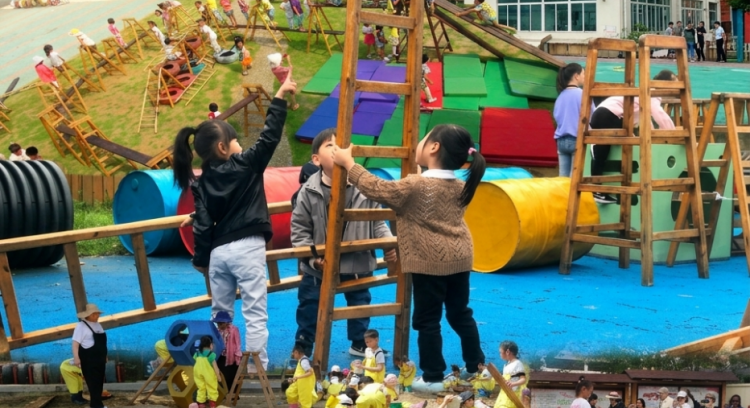
This project values movement, exploration of outdoor space, and the experience of controlled risks, promoting meaningful learning opportunities and contributing to the motor, emotional, social, and cognitive development of children.
Storm Kristin caused significant damage to the urban ecosystems of Marinha Grande and Leiria, significantly affecting the green spaces integrated into educational establishments. This reality created not only the need to recover destroyed natural areas, but also the opportunity to rethink the relationship between the school community and the environment, promoting new learning dynamics in a real-world context.
The "Playing in Freedom" project views learning as an active, autonomous, inclusive, and meaningful process, recognizing the crucial role of the educational environment in knowledge construction, the child's holistic development, and the promotion of their well-being. Based on this vision, the creation of outdoor environments for free and challenging play, inspired by Professor Carlos Neto's reflections and contributions on the importance of play, movement, and the relationship with outdoor space, deepens and broadens a pedagogical approach that places the child at the center of the educational process.
This proposal was also inspired by the Anji Play model, developed in the Anji region of China, which has been gaining international recognition for its pedagogical value placed on free play, movement, autonomy, and respect for children's abilities.
These environments reinforce a child-centered pedagogy , based on respect for their rhythms, interests, needs, and abilities, promoting contexts rich in opportunities for exploration, discovery, and experimentation. Regular contact with outdoor spaces and open, transformable materials fosters physical and emotional well-being, stimulates natural curiosity, develops confidence, and contributes to building a positive relationship with learning.
By valuing play as a foundational learning experience, the project recognizes the child as a competent subject, capable of acting intentionally, exploring the world around them, making decisions, cooperating with others, facing challenges, and taking risks in an increasingly conscious way. This perspective attributes a full pedagogical status to play, understanding it as a complex process of meaning-making, and not merely as a way to pass the time.
The "Playing in Freedom" project thus contributes to building a more humane, inclusive school that promotes educational success, where all children have real opportunities to participate, explore, learn, and develop fully, respecting diversity and guaranteeing the fundamental right to play.
Scientific and Technical Basis
Based on the words of Professor Carlos Neto, "a healthy child has scraped knees," he further states that the reduction in time dedicated to physical activity "and to playing in family, school and community contexts, and especially in outdoor spaces" (2020), has been compromising motor development, autonomy, self-regulation capacity and the overall well-being of the child, distancing them from experiences that are fundamental to building a healthy and balanced childhood.
Outdoor play constitutes a powerful educational context for the development of cognitive, social, emotional, and motor skills, fostering autonomy, initiative, cooperation, communication, problem-solving, creativity, and self-regulation. Movement, the body, and the relationship with space, materials, and others become central elements of learning, enhancing rich, meaningful, and lasting experiences.
In this way, recreation and outdoor spaces cease to be understood merely as moments or places for pauses between formal activities, and begin to assert themselves as intentional, thoughtfully designed, organized, and pedagogically recognized educational environments. In these spaces, play is legitimized as an essential way of learning, communicating, cooperating, and building knowledge, in close connection with the curriculum, reading practices, artistic and physical expression, citizenship, and inclusion.

As escolas
About the author
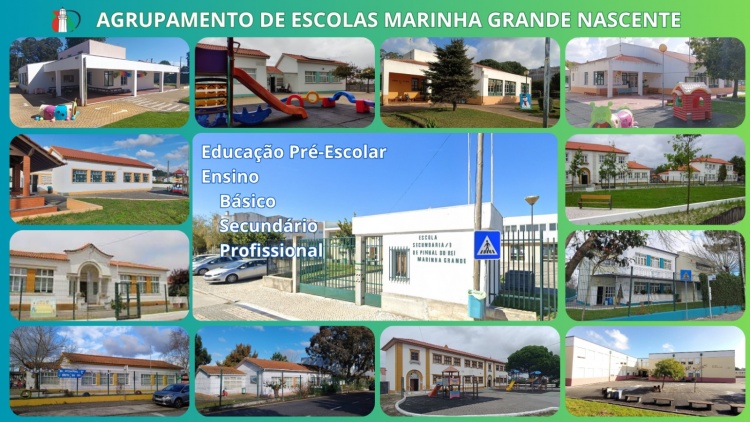
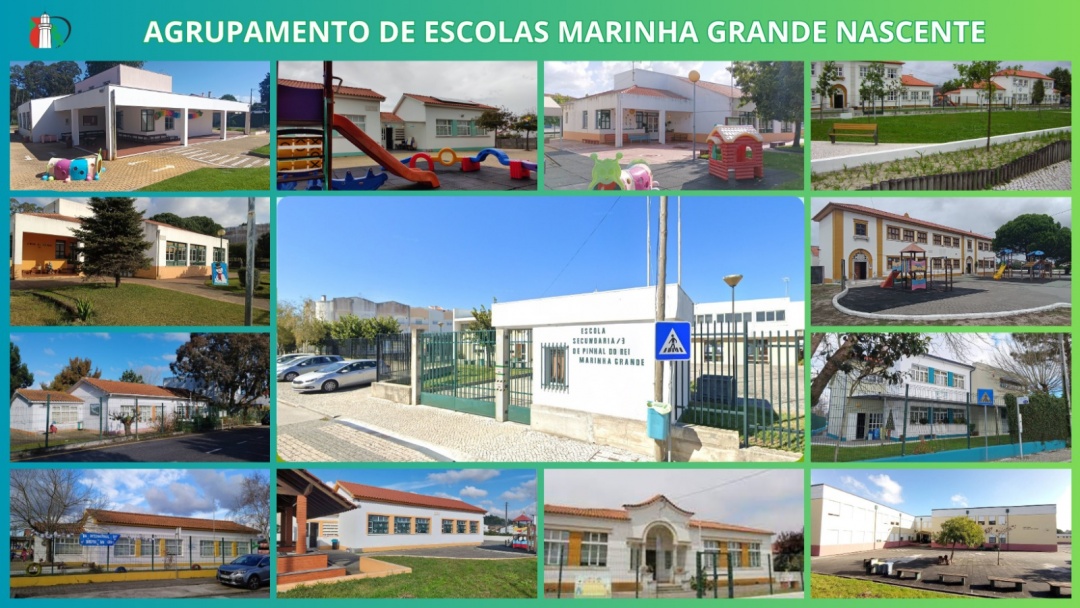
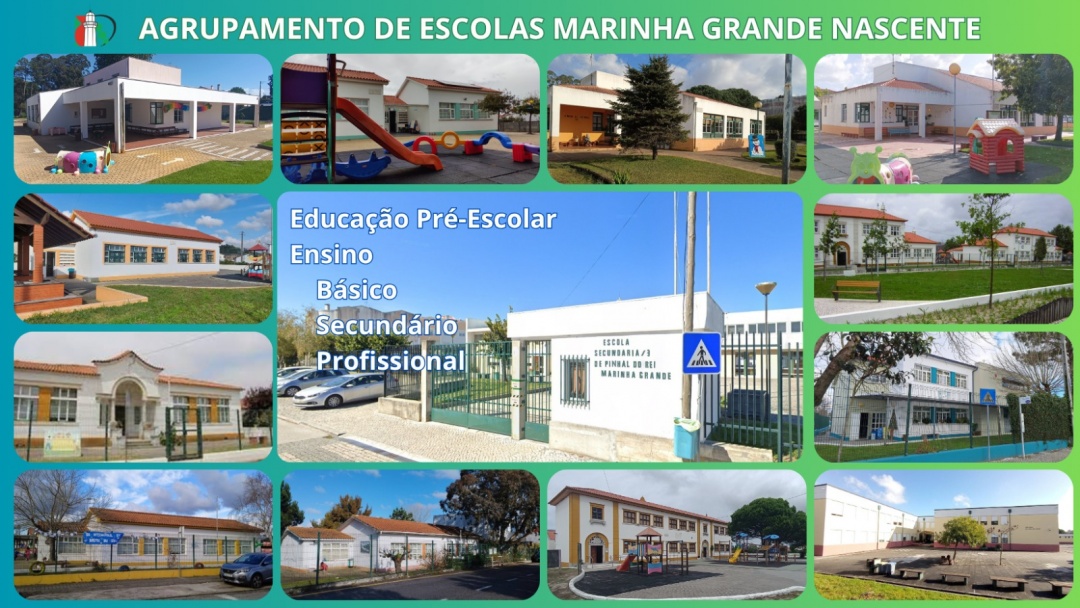
It resulted from the merger of the Prof. Alberto Nery Capucho School Group with the Pinhal do Rei Secondary School on April 24, 2013, encompassing Pre-School Education, Basic Education, and Secondary Education (Regular and Vocational). The Group is composed of several organic units:
|
Preschool Education
|
Basic
|
Secondary Education
|
|
1st Cycle of Basic Education
|
2nd Cycle of Basic Education
|
3rd Cycle of Basic Education
|
|
|
JI Boavista
JI Comeira
JI Engenho
JI João Beare
JI Pedrulheira
JI Pilado
JI Trout
|
EB Albergaria
EB Comeira
EB Engenho
EB João Beare
EB Nery Capucho
EB Picassinos
EB Pilado
EB Trout
|
EB Nery Capucho
|
EB Nery Capucho
ES Pinhal do Rei
|
ES Pinhal do Rei
|
The school group provides academic services to 2124 students from 28 different nationalities.
The diversity of the public, resulting from the city's multicultural growth, combined with the increase in compulsory schooling to 18 years of age, requires educational agents to develop strategies that contribute to solving problems related to school failure and dropout, promoting effective social inclusion.
The school cluster has essential technical and pedagogical resources and equipment that ensure the quality of student learning. It offers Special Education services, Psychology and Guidance services, and Speech Therapy services. The cluster has three libraries integrated into the School Libraries network (Nery Capucho, Pinhal do Rei and EB João Beare) and two Media Centers (EB Comeira and EB Engenho).
AEMGN is committed to an Inclusive School that aims to meet the diverse needs of students, where each one has the opportunity to find educational solutions according to their expectations and potential. Therefore, one of the major challenges is adapting teaching processes to the individual characteristics and conditions of each student, through the mobilization of support measures for learning and inclusion, and the provision of resources so that all students have access to the curriculum and learning opportunities.
AEMGN provides support to students with specific needs, distributed across different educational cycles, from preschool to the twelfth grade. The learning support center includes specialized support for multiple disabilities in the 3rd cycle of basic education and secondary education, and a similar service is being created for the 2nd cycle of basic education.
4.1. Educational establishments covered
The 7 educational establishments in the Group's preschool network will be covered:
Budget and due dates
Technical Description of the Intervention
The intervention will be organized in four sequential stages :
5.1 Stage 1 – Diagnosis and Co-construction of the Vision
- Analysis of existing outdoor spaces;
- Involvement of children, teachers, assistants and families;
- Collaborative definition of playing zones.
5.2 Stage 2 – Organization of Space and Materials
- Selection and acquisition/construction of materials;
- Flexible organization, without rigid paths;
- Guaranteed functional safety, without eliminating the challenge.
5.3 Stage 3 – Training and Awareness
- Introduction to the principles of Anji Play;
- Pedagogical observation and documentation;
- Connection with curricular and reading practices.
5.4 Stage 4 – Dynamization, Monitoring and Sustainability
- Continuous evaluation of the use of spaces;
- Rotation and renewal of materials;
- Sharing best practices within the educational community.
6. Resource and Material Typology
The outdoor spaces are organized into open, flexible, and transformable zones, using unstructured, robust, and inclusive materials, namely:
- Large blocks of wood;
- Planks, logs, rolls, boxes;
- Tires, ropes, ramps;
- Durable fabrics;
- Stones, sand, water;
- Safe recycled materials;
The materials do not have a predefined function, allowing for multiple solutions and interpretations by the children.
However, for certain activities involving controlled risks, a rubber shock-absorbing floor is necessary to reduce the impact of falls and minimize the occurrence of accidents.
7. Implementation Steps and Budget
The requalification of each of the spaces implies the completion of the steps indicated below, with an estimated cost of approximately €5,000 per space. This allows for the reconfiguration of the space, including the creation of a cushioned floor zone of approximately 100m² , the acquisition of equipment, and the implementation of training and awareness-raising activities, as well as the promotion, monitoring, and sustainability of the project. The estimated cost for the intervention in all three schools is €35,000.
|
Step
|
Description
|
Value
|
|
1
|
Consultancy
|
500 €
|
|
2
|
Preparation, Equipment and Planting
|
4,500 €
|
|
Total: €5,000
|
|
|